
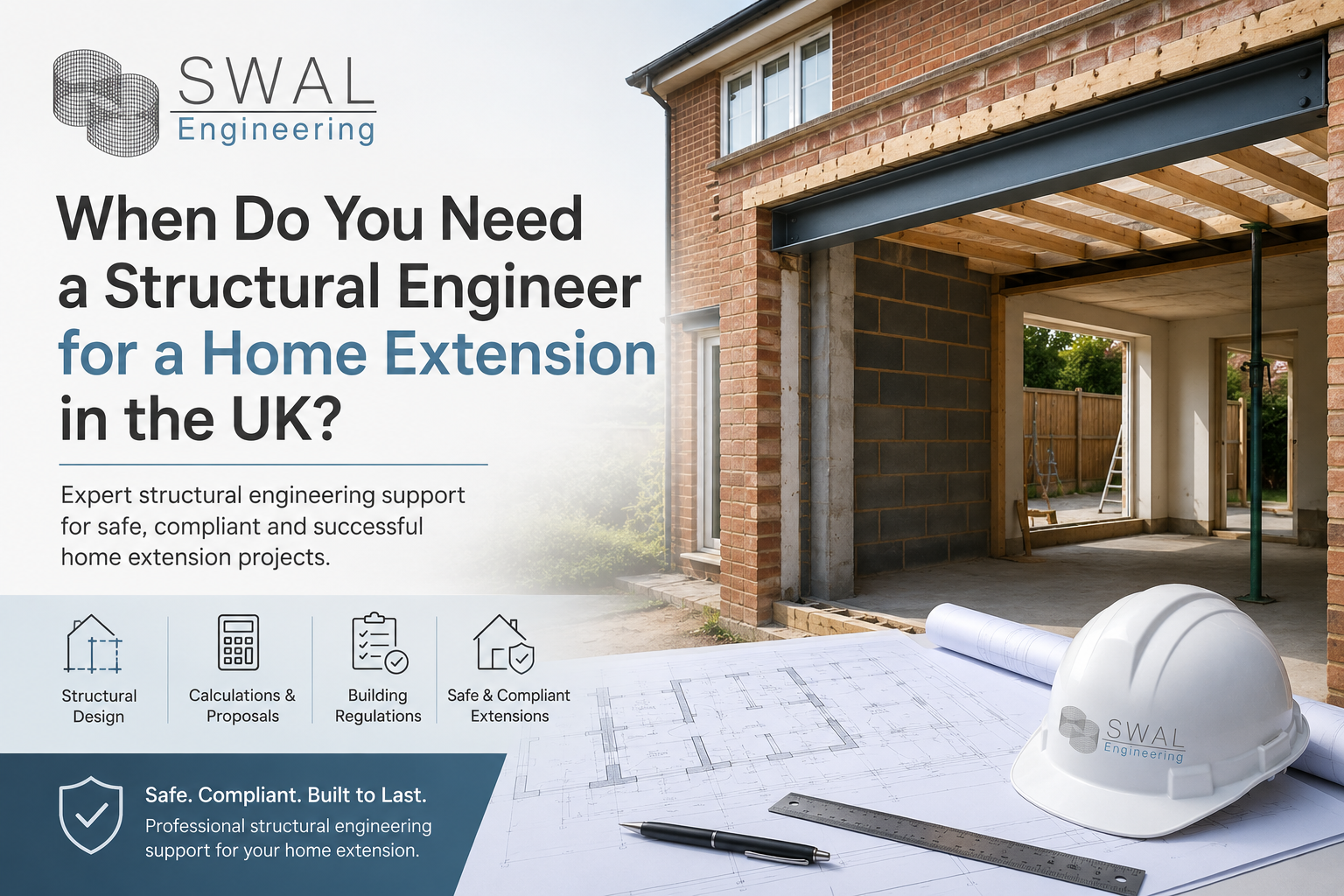
Planning a home extension is exciting. More space, a better layout, maybe that long-awaited kitchen-diner you’ve been dreaming about. But somewhere between the Pinterest boards and the planning drawings, an important question often arises:
Do I need a structural engineer?
The short answer is: very often, yes.
While architects and designers focus on how a space looks and functions, structural engineers ensure the building actually stands up safely and performs as intended. If you’re extending or altering your home, structural engineering advice is often essential for both safety and compliance with UK Building Regulations. Let’s look at when a structural engineer becomes a key member of your project team.
Removing Load-Bearing Walls
One of the most common reasons homeowners need a structural engineer is when removing a load-bearing wall. Modern home extensions often involve opening up internal spaces to create larger kitchens, living areas or open-plan layouts. However,
walls within your home may provide integral support to part of the structure above, i.e floors, roofs and walls. Removing them without proper structural support can compromise the stability of the building. A structural engineer will:
- Assess whether the wall is load-bearing
- Calculate the loads being supported
- Design the appropriate beam (often a steel beam or RSJ)
- Provide structural calculations required by Building Control
In other words, we ensure that when the wall comes down, the rest of the house stays exactly where it should be.
Designing Structural Elements for the Extension
When you build an extension, new structural elements must be designed to safely support the building. This may include:
- Foundations
- Steel beams and lintels
- Padstones
- Steel columns
- Resisting lateral wind loading
- Load-bearing walls
- Floor structures
- Roof structures
A structural engineer calculates how loads move through the building and into the ground. These calculations are required to demonstrate compliance with UK Building Regulations and Eurocodes. Without this structural design work, your extension may struggle to obtain Building Control approval, which is essential for construction and future property transactions.
Large Open-Plan Extensions
Many modern extensions aim to create large, light-filled spaces with minimal internal walls or structure. Think sliding glass doors, large spans and wide openings into existing rooms. While these spaces look effortless, the structure behind them rarely is. Large openings often require carefully designed steel beams or structural frames to support the loads above. Structural engineers calculate these loads and design the most efficient solution.
This ensures the structure remains:
- Safe
- Cost-effective
- Buildable for contractors
The goal is always to deliver a design that works structurally without over-engineering the solution.
Loft Conversions and Structural Alterations
Loft conversions are another situation where structural engineering is almost always required. Most existing roof structures were not originally designed to support the additional loads created by a habitable space. New structural elements are usually required, such as:
- Steel beams to support new floors
- Reinforcement to existing rafters
- New load paths to foundations
- Upgrading existing joist
- Forming new stair opening
A structural engineer assesses the existing structure and designs the necessary strengthening to ensure the loft conversion meets safety standards. Without these calculations, the project cannot proceed through Building Control approval.
Foundation Design
Foundations are not something most homeowners see once the project is finished, but they are absolutely critical to the long-term performance of the building.
Structural engineers assess factors such as:
- Soil conditions
- Groundwater levels
- Tree influence
- Nearby structures
Based on these factors, they design foundations that safely transfer the building loads into the ground. While foundation design may not be the most glamorous part of an extension, it is one of the most important. A well-designed foundation ensures the extension remains stable for decades.
Structural Calculations for Building Control
In the UK, Building Control approval is required for almost all structural work carried out as part of a home extension. Building Control officers will ask for structural calculations and drawings to confirm that the design complies with regulations. These documents are typically prepared by a structural engineer and may include:
- Beam and column calculations
- Wall block/brick strength calculations
- Foundation design calculations
- Structural analysis and design calculations
- Structural details and drawings
- Loading assessments
These documents allow Building Control to verify that the extension has been properly designed and can be constructed safely.
When Should You Contact a Structural Engineer?
The best time to involve a structural engineer is early in the design process. Working collaboratively with architects and designers from the outset allows the structural design to develop alongside the architectural vision. This helps avoid redesigns later and ensures the structure is integrated efficiently into the project.
Early engineering advice can also help identify:
- Potential structural constraints
- More efficient design options
- Opportunities to reduce construction costs
In short, involving a structural engineer early can save both time and money.
The Value of Professional Structural Advice
Home extensions are significant investments, and the structural integrity of the building should never be left to guesswork. A qualified structural engineer provides:
- Professional structural calculations
- Safe and compliant designs
- Clear communication with contractors and Building Control
- Confidence that the structure will perform as intended
For homeowners, this reassurance is invaluable. For contractors and architects, it ensures the project proceeds smoothly and without structural surprises.
So What Does This All Mean?
If you are planning a home extension in the UK, there is a strong chance you will need a structural engineer at some stage of the project. Whether removing walls, designing foundations or supporting large openings, structural engineering plays a crucial role in ensuring the extension is safe, compliant and built to last. While structural engineering may operate quietly behind the scenes, it is one of the most important elements of a successful construction project. And when everything is properly designed and calculated, the result is simple: your new space works beautifully, and your home stays exactly where it should be.



Hi, this is a comment.
To get started with moderating, editing, and deleting comments, please visit the Comments screen in the dashboard.
Commenter avatars come from Gravatar.